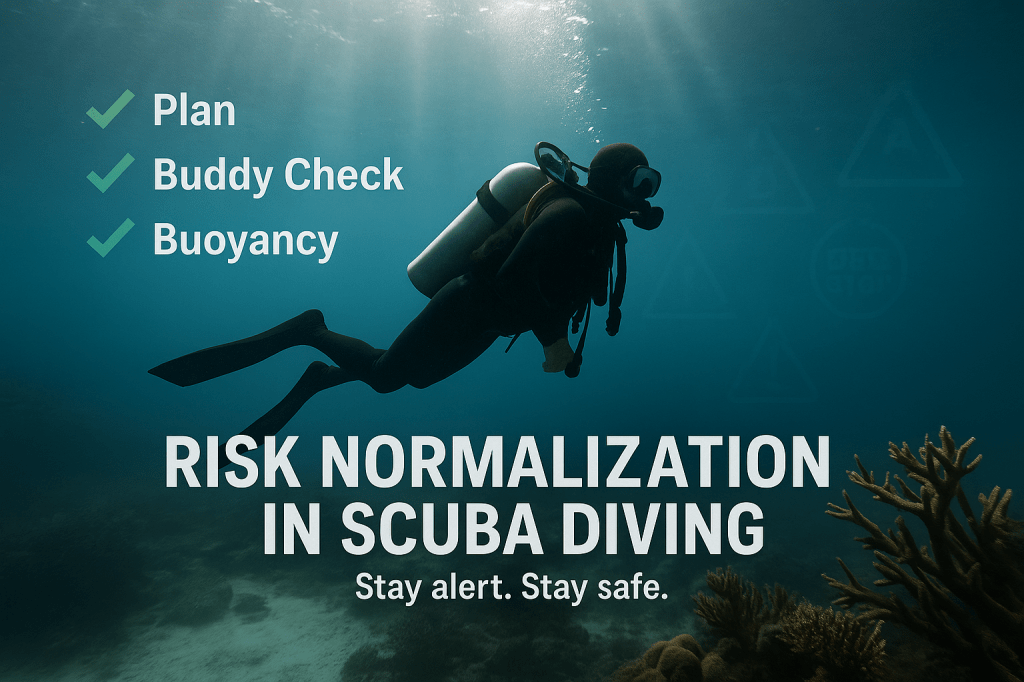
• Understanding Risk Normalization in Scuba Diving: Staying Safe Beneath the Waves

    Scuba diving is an exhilarating adventure that opens up a vibrant underwater world, from coral reefs teeming with life to mysterious wrecks steeped in history. However, like any adventure sport, it comes with inherent risks—equipment failure, marine life encounters, decompression sickness, and unpredictable ocean conditions, to name a few. For divers, managing these risks is critical to ensuring a safe and enjoyable experience. One subtle but significant psychological phenomenon that can undermine safety is risk normalization. In this article, we’ll explore what risk normalization is, how it manifests in scuba diving, and practical steps divers can take to counteract it.

    What Is Risk Normalization?

    Risk normalization, also known as risk habituation, occurs when individuals become desensitized to potential dangers due to repeated exposure to risky situations without negative consequences. Over time, behaviors or conditions that were once perceived as hazardous begin to feel routine or “normal,” leading to a reduced sense of caution. In scuba diving, this can be particularly dangerous because the underwater environment is unforgiving, and complacency can lead to life-threatening mistakes.

    For example, a diver who frequently skips pre-dive equipment checks without incident may start to view this shortcut as harmless. Similarly, a diver who regularly exceeds depth limits or dives in strong currents without immediate consequences may begin to see these practices as acceptable, even though they increase the likelihood of accidents.

    How Risk Normalization Sneaks Into Scuba Diving

    Scuba diving involves a unique blend of technical procedures and environmental awareness, making it fertile ground for risk normalization to develop. Here are some common ways it appears:

    1. Repetitive Safe Dives
      After dozens of successful dives, divers may become overconfident and begin to underestimate the importance of safety protocols. For instance, a diver might think, “I’ve done this dive site 50 times; I don’t need to double-check my air supply or dive plan.” This mindset can lead to overlooking critical details, such as a faulty regulator or an inadequate air reserve.
    2. Peer Influence and Group Dynamics
      Diving is often a social activity, and group dynamics can contribute to risk normalization. If a dive group consistently pushes limits—such as diving deeper than planned or ignoring no-decompression limits—newer divers may adopt these behaviors, assuming they’re standard practice. Over time, the group as a whole may normalize unsafe habits.
    3. Familiarity with Dive Sites
      Divers who frequently visit the same sites may become overly comfortable, assuming they know the conditions well. However, ocean environments are dynamic, with currents, visibility, and marine life changing unpredictably. Assuming a site is “safe” because past dives went smoothly can lead to inadequate preparation.
    4. Gradual Boundary-Pushing
      Divers often push their limits incrementally—extending bottom time slightly, diving a bit deeper, or skipping a rest interval. When these deviations don’t result in immediate harm, divers may perceive them as safe, gradually normalizing riskier behaviors until they become standard practice.
    5. Overreliance on Equipment or Training
      Modern scuba gear is highly reliable, and dive training is rigorous, but overconfidence in equipment or skills can lead to complacency. For instance, a diver might neglect emergency procedures, thinking, “My gear is top-notch, and I’m certified; nothing will go wrong.”

    The Dangers of Risk Normalization in Scuba Diving

    When risks are normalized, divers may engage in behaviors that increase the likelihood of accidents. Some potential consequences include:

    • Equipment-Related Incidents: Skipping pre-dive checks can lead to undetected issues, such as leaks or malfunctioning regulators, which can cause emergencies underwater.
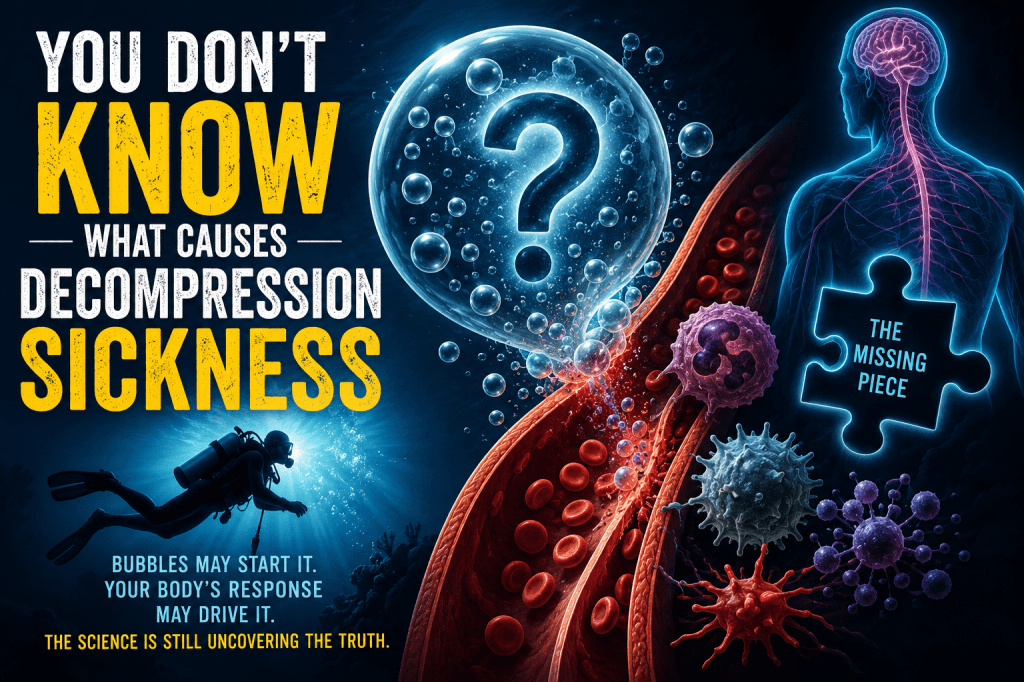
    • Decompression Sickness (DCS): Ignoring no-decompression limits or ascending too quickly can increase the risk of DCS, a potentially serious condition caused by nitrogen bubbles forming in the body.
    • Out-of-Air Situations: Failing to monitor air supply closely or plan for adequate reserves can lead to running out of air, forcing an emergency ascent or reliance on a buddy’s alternate air source.
    • Environmental Hazards: Underestimating currents, waves, or marine life can result in divers becoming separated, trapped, or injured.
    • Delayed Response to Emergencies: Complacency can slow reaction times, making it harder to manage unexpected situations like entanglement or equipment failure.

    Data from the Divers Alert Network (DAN) highlights the impact of human error in diving accidents. In their 2020 Annual Diving Report, DAN noted that human factors, such as poor decision-making and failure to follow safety protocols, contributed to a significant portion of incidents. Risk normalization plays a role in these errors by dulling divers’ awareness of potential dangers.

    How to Counteract Risk Normalization

    Preventing risk normalization requires conscious effort and a commitment to maintaining safety standards, no matter how experienced or comfortable a diver feels. Here are practical strategies to stay vigilant:

    1. Stick to Safety Protocols Religiously
      • Always perform pre-dive checks (e.g., BWRAF: Begin With Review And Friend—Buoyancy, Weights, Releases, Air, Final OK). Treat every dive as if it’s your first, ensuring all equipment is inspected and dive plans are clear.
      • Follow dive tables or computer guidelines for depth, bottom time, and ascent rates, even if you’ve “gotten away” with bending the rules before.
    2. Refresh Training Regularly
      • Take refresher courses or advanced training to reinforce safety habits and update skills. For example, a Rescue Diver course can sharpen emergency response techniques, reminding divers of potential risks.
      • Practice emergency skills, like sharing air or performing controlled ascents, in controlled environments to maintain readiness.
    3. Plan Every Dive Thoroughly
      • Before each dive, review the site’s conditions, weather, and potential hazards, even if you’ve dived there before. Use a checklist to ensure nothing is overlooked.
      • Discuss emergency procedures with your buddy, including out-of-air scenarios, lost buddy protocols, and hand signals.
    4. Monitor Your Mindset
      • Be aware of complacency creeping in. Ask yourself, “Am I cutting corners because it’s worked before, or because it’s truly safe?” If you notice yourself rationalizing risky behavior, pause and reassess.
      • Set personal limits (e.g., maximum depth, minimum air reserve) and stick to them, regardless of peer pressure or past experiences.
    5. Learn from Near-Misses
      • Treat close calls—such as low air or unexpected currents—as learning opportunities rather than flukes. Analyze what went wrong and adjust your habits to prevent recurrence.
      • Share experiences with your dive community to raise awareness and encourage a culture of safety.
    6. Dive with Responsible Buddies
      • Choose dive partners who prioritize safety and are willing to call out risky behavior. A good buddy can help keep you accountable and reinforce safe practices.
      • Avoid diving with groups that consistently push limits or dismiss safety concerns, as their influence can normalize unsafe habits.
    7. Stay Informed About Risks
      • Read incident reports from organizations like DAN to understand common causes of accidents. Real-life examples can serve as a sobering reminder of diving’s risks.
      • Stay updated on best practices through dive magazines, forums, or local dive shops.

    Building a Culture of Safety in the Dive Community

    Risk normalization isn’t just an individual issue—it can permeate entire dive communities. Dive operators, instructors, and experienced divers play a crucial role in fostering a safety-first culture. Operators should enforce strict safety standards, such as mandatory briefings and equipment checks, while instructors can emphasize the importance of vigilance in training. Experienced divers can lead by example, modeling safe behaviors and mentoring newer divers.

    Encouraging open discussions about near-misses and accidents without judgment can also help. By sharing lessons learned, divers can collectively reinforce the importance of staying alert and prepared, countering the tendency to normalize risks.

    Conclusion: Staying Sharp for Safe Diving

    Scuba diving offers unparalleled opportunities to explore the ocean’s wonders, but it demands respect for its risks. Risk normalization is a subtle trap that can lull even experienced divers into a false sense of security, increasing the chances of accidents. By recognizing the signs of complacency, adhering to safety protocols, and fostering a culture of vigilance, divers can keep risks in check and enjoy the underwater world safely.

    Whether you’re a novice diver or a seasoned pro, treat every dive as a fresh opportunity to prioritize safety. Stay sharp, stay prepared, and keep the ocean’s magic alive for countless dives to come.

  • For scuba divers exploring remote waters where cellular signals vanish, devices with satellite emergency call or messaging capabilities are critical for surface-based emergencies—whether stranded on a boat or surfacing far from help. Below is a detailed list of smartphones and satellite devices, including specific satellite functionalities, tailored for real-life scenarios like a secluded reef in the Bahamas, a deep dive in the Gulf of Mexico, or an inland emergency near Glacier National Park after diving in nearby lakes. The Samsung Galaxy S25 series is included for a robust smartphone lineup. While smartphones offer convenience, dedicated satellite phones and communicators provide unmatched durability and reliability in harsh marine or wilderness settings. All devices require a clear line of sight to the sky and work only on the surface, not underwater.

    Smartphones with Satellite Emergency Features

    These smartphones integrate satellite SOS and messaging, ideal for surface emergencies when cellular networks fail. Their satellite functionalities are detailed, with scenarios illustrating their use.

    1. Samsung Galaxy S25 Series (2025) Video
      • Satellite Functionality: Emergency SOS texting and two-way SMS via Skylo’s low-earth orbit (LEO) network. Uses the Snapdragon 8 Elite chipset’s X70 modem to send pre-composed SOS messages with GPS coordinates to emergency services and limited two-way messaging (5-10 messages per session). Connection time: 15-45 seconds.
      • Details: Launched January 2025 (S25, S25+, S25 Ultra). Exclusive to Verizon in the U.S. as of March 2025, with 25W (S25) or 45W (S25+/Ultra) charging.
      • Scenarios:
        • Secluded Bahamas Reef: You’re on a dive boat near the Exumas, 50 miles from Nassau, when a diver suffers decompression sickness. Cellular is out; you use SOS to text the Bahamian coast guard via Skylo, coordinating a medevac.
        • Gulf of Mexico: After a deep wreck dive 80 miles offshore, your boat’s engine fails. You message family via two-way SMS to update your status while awaiting rescue.
        • Glacier National Park: Post-dive in Bearhat Lake, a hiker in your group twists an ankle. Verizon coverage is spotty; you send an SOS with location to park rangers.
      • Pros: Two-way messaging, high-end hardware.
      • Cons: Verizon-only, needs a waterproof case.
    2. Apple iPhone 14 Series (2022)
      • Satellite Functionality: Emergency SOS via Globalstar’s LEO network. Sends compressed text messages with GPS and Medical ID after a questionnaire (e.g., “What’s the emergency?”). Connection time: 15 seconds to 1 minute.
      • Details: iPhone 14, 14 Plus, 14 Pro, 14 Pro Max (iOS 16.2+). Free for two years post-activation.
      • Scenarios:
        • Secluded Bahamas Reef: Surfacing from a cave dive, you spot a shark-bitten diver. You text emergency services via Globalstar, guiding a rescue boat.
        • Gulf of Mexico: A storm strands you on a rig platform; you send your coordinates to the U.S. Coast Guard.
        • Glacier National Park: A dive buddy collapses lakeside; you alert rangers with precise GPS.
      • Pros: Intuitive, widely available (U.S., Canada, Europe).
      • Cons: Text-only, battery-limited.
    3. Apple iPhone 16 Series (2024)
      • Satellite Functionality: Emergency SOS and two-way messaging via Globalstar. SOS texts responders, while messaging supports short exchanges (3-5 messages) with contacts. Connection time: 10-30 seconds.
      • Details: iPhone 16, 16 Plus, 16 Pro, 16 Pro Max (iOS 18+).
      • Scenarios:
        • Secluded Bahamas Reef: Post-dive, your boat drifts off course. You text emergency services and message your resort for backup.
        • Gulf of Mexico: A crew member has a heart attack; you coordinate with the Coast Guard and update base camp.
        • Glacier National Park: A bear encounter post-dive prompts an SOS and a “We’re okay” to family.
      • Pros: Messaging versatility, fast lock-on.
      • Cons: Needs casing, higher cost.
    4. Google Pixel 9 Series (2024) Video
      • Satellite Functionality: Satellite SOS via Skylo. Triggered by a failed 911 call, sends emergency texts with location (5-7 messages). Connection time: 15-45 seconds.
      • Details: Pixel 9, 9 Pro, 9 Pro XL, 9 Pro Fold. U.S.-only.
      • Scenarios:
        • Secluded Bahamas Reef: Not applicable (U.S.-only).
        • Gulf of Mexico: A dive boat sinks; you text the Coast Guard from a life raft.
        • Glacier National Park: A sudden storm traps you post-dive; you alert rangers.
      • Pros: Broad U.S. carrier support, demo mode.
      • Cons: U.S.-limited, less rugged.

    Dedicated Satellite Phones

    These rugged devices offer voice, texting, and SOS via global networks, excelling in marine and wilderness emergencies.

    1. Iridium 9575 Extreme
      • Satellite Functionality: Voice calls, SMS, and dedicated SOS via Iridium’s LEO constellation (66 satellites). SOS button sends GPS to GEOS; voice calls up to 4 hours, unlimited SMS with plan. Connection time: 10-20 seconds.
      • Details: Rugged (MIL-STD 810F), 30 hours standby.
      • Scenarios:
        • Secluded Bahamas Reef: A diver’s lost underwater; you call the coast guard and send coordinates.
        • Gulf of Mexico: Oil slick exposure sickens your team; you voice-call for evacuation.
        • Glacier National Park: A post-dive avalanche traps you; SOS tracks your location.
      • Pros: Global coverage, durable, tracking.
      • Cons: Expensive, bulky.
    2. Inmarsat IsatPhone 2
      • Satellite Functionality: Voice, SMS, and SOS via Inmarsat’s GEO satellites (I-4). SOS sends GPS to emergency services; voice calls up to 8 hours. Connection time: 20-40 seconds.
      • Details: 160 hours standby, excludes polar regions.
      • Scenarios:
        • Secluded Bahamas Reef: A boat fire forces evacuation; you call for help.
        • Gulf of Mexico: A hurricane approaches; you coordinate rescue.
        • Glacier National Park: Less effective due to latitude (weak signal).
      • Pros: Long battery, affordable.
      • Cons: No polar coverage.

    Satellite Communicators

    Compact options for emergency signaling and messaging, ideal for scuba kits.

    1. Garmin inReach Mini 2
      • Satellite Functionality: Two-way texting and SOS via Iridium. Unlimited SOS messages with GPS to GEOS; 10-20 custom texts per session. Connection time: 15-30 seconds.
      • Details: Lightweight, 14-day battery in tracking mode.
      • Scenarios:
        • Secluded Bahamas Reef: A diver’s missing; you text search teams with coordinates.
        • Gulf of Mexico: Stranded after a dive, you message for a tow.
        • Glacier National Park: Post-dive injury; you text rangers and family.
      • Pros: Portable, reliable, global.
      • Cons: No voice, subscription-based.
    2. Nautilus LifeLine Marine Rescue GPS
      • Satellite Functionality: None (VHF-based). Broadcasts GPS and distress via VHF Channel 16 and DSC (12-mile range). No satellite link.
      • Details: Waterproof to 425 feet, scuba-specific.
      • Scenarios:
        • Secluded Bahamas Reef: Surfacing far from the boat, you signal nearby vessels.
        • Gulf of Mexico: A rig dive goes wrong; you alert passing ships.
        • Glacier National Park: Not applicable (no marine VHF use).
      • Pros: Diver-friendly, no subscription.
      • Cons: Limited range, not satellite-powered.

    Key Considerations for Scuba Divers

    • Smartphones: The Samsung Galaxy S25 Ultra (Verizon) excels with two-way SMS via Skylo for Gulf or U.S.-based Glacier scenarios, while the iPhone 16 adds messaging versatility via Globalstar, ideal for the Bahamas. Both need protective cases and battery backups.
    • Dedicated Devices: The Iridium 9575 Extreme offers voice and SOS globally, perfect for all three locations, especially the Bahamas and Gulf. The Garmin inReach Mini 2 is compact and reliable across scenarios.
    • Coverage: Iridium covers all regions; Inmarsat suits Bahamas and Gulf but falters near Glacier; smartphone features vary (e.g., Verizon/Skylo for S25, U.S.-only for Pixel).
    • Usage: Surface-only with sky access. Pair with a DSMB for visibility.

    In the Bahamas, the Iridium 9575 Extreme ensures voice contact; in the Gulf, the Samsung Galaxy S25 Ultra leverages Verizon’s reach; near Glacier, the iPhone 16 or Garmin inReach handles inland SOS. Test devices and confirm service before diving.

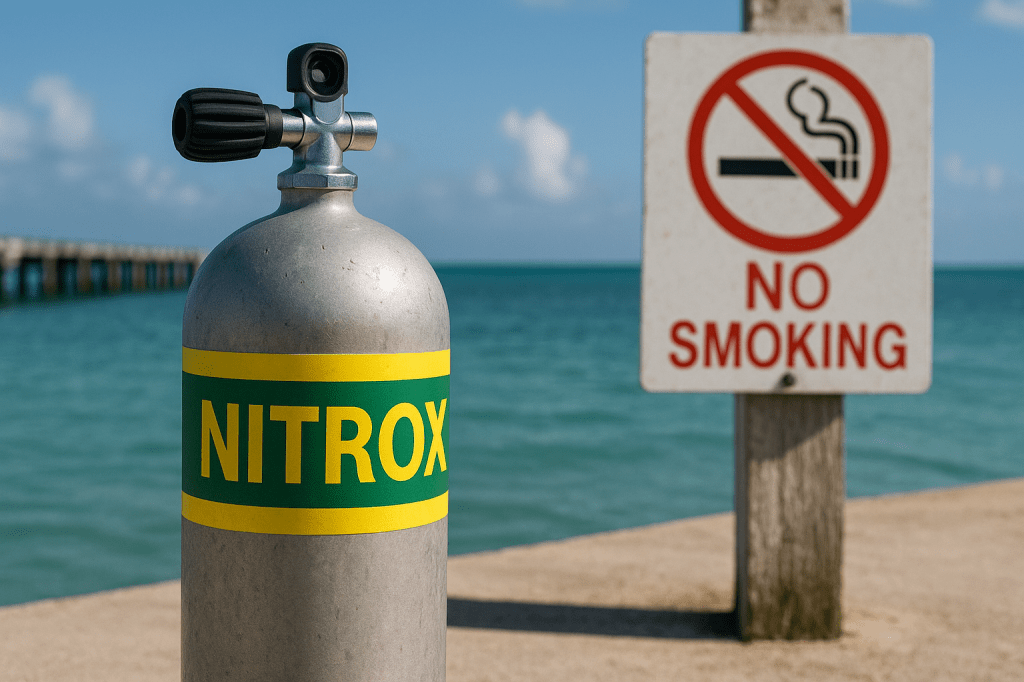
  • Why You Should Always Handle Nitrox Tanks as if They Contain Pure Oxygen

    Why You Should Always Handle Nitrox Tanks as if They Contain Pure Oxygen

    Nitrox, a breathing gas with elevated oxygen content (typically 22% to 40%), offers scuba divers benefits like extended bottom times and reduced decompression risks. However, its higher oxygen levels also heighten hazards—particularly fire or explosion risks—if not managed carefully. While Nitrox isn’t pure oxygen (100% O₂), treating it as such ensures maximum safety by addressing worst-case scenarios and minimizing errors. Real-world incidents and the perspectives of scuba industry organizations reinforce the value of this cautious approach.


    1. Errors in Gas Mixing or Labeling Can Be Catastrophic

    Mistakes during blending or labeling can result in tanks containing far more oxygen than intended—sometimes nearing pure oxygen levels. Treating every Nitrox tank as a high-oxygen risk mitigates these dangers.

    • Real-Life Scenario:
      In 2008, a Florida dive shop mistakenly filled a tank with nearly 80% oxygen instead of the labeled 36% Nitrox. The diver, trusting the label, used it without verifying and narrowly avoided oxygen toxicity at depth. A “pure oxygen” mindset could have prompted stricter checks, catching the error.

    2. Elevated Oxygen Increases Fire and Explosion Risks

    Even at typical Nitrox levels, the enriched oxygen content makes materials more flammable. A minor leak or spark can ignite a fire, with risks escalating as oxygen concentration rises.

    • Real-Life Accident:
      In 1997, a 40% Nitrox tank exploded in a California dive shop, injuring two workers. Trace oil from inadequate cleaning ignited under pressure in the oxygen-rich environment. Treating the tank as pure oxygen would have required meticulous cleaning, preventing the blast.

    3. Equipment Must Be Oxygen-Compatible

    Higher oxygen levels demand “oxygen-cleaned” gear to avoid ignition. While standard Nitrox often works with regular equipment, assuming pure oxygen ensures all gear meets stringent safety standards.

    • Real-Life Scenario:
      In 2015, a technical diver used a non-oxygen-compatible regulator with 50% Nitrox. An O-ring failure caused a leak at depth, forcing an emergency ascent. Oxygen-safe equipment, mandatory for pure oxygen, would have averted this.

    4. Simplifying Safety Protocols Reduces Human Error

    In diving—especially technical diving with multiple gas mixes—consistent rules are vital. Treating all Nitrox tanks as pure oxygen eliminates guesswork and reduces oversights.

    • Real-Life Accident:
      In 2003, a Red Sea dive boat fire destroyed the vessel after a 40% Nitrox tank, stored near a heat source, was mishandled as if it were air. A “pure oxygen” approach would have enforced proper storage, avoiding the disaster.

    5. Tank Analysis Isn’t Foolproof

    Divers are trained to analyze Nitrox before use, but analyzers can malfunction or be misread. Assuming a tank contains pure oxygen encourages rigorous verification.

    • Real-Life Scenario:
      In 2019, a Caribbean diver misread his analyzer, believing his tank held 32% oxygen when it was 45%. He experienced early oxygen toxicity symptoms at depth. Treating it as pure oxygen might have prompted a double-check, averting the risk.

    Stances of Scuba Industry Organizations

    Scuba organizations universally prioritize safety, but their specific guidelines for handling Nitrox tanks differ. Here’s how key groups approach the topic:

    • PADI (Professional Association of Diving Instructors):
      PADI, the leading recreational diving agency, requires divers to analyze Nitrox tanks before each dive and follow safe handling practices. Their Enriched Air Diver course highlights oxygen safety, including cleaning gear for mixes above 40%, but doesn’t explicitly mandate treating Nitrox as pure oxygen. PADI focuses on practical, standardized safety for recreational divers.
    • NAUI (National Association of Underwater Instructors):
      NAUI emphasizes education and gas analysis in its Nitrox training, advocating for equipment compatibility and careful handling. While they don’t require a “pure oxygen” approach, they encourage conservative practices, particularly in high-risk settings, leaving room for diver discretion.
    • DAN (Divers Alert Network):
      DAN, a diving safety advocate, recommends treating any gas with elevated oxygen as a potential hazard. They advise oxygen-cleaning standards for mixes above 23.5% oxygen, aligning closely with the “treat as pure oxygen” philosophy to prevent accidents and promote best practices.
    • TDI (Technical Diving International):
      TDI, focused on technical diving, mandates oxygen-cleaned equipment for mixes above 40% and recommends it for lower percentages as a precaution. Their rigorous protocols for advanced gas use lean toward treating Nitrox tanks with pure oxygen-level care, reflecting technical diving’s high stakes.
    • IANTD (International Association of Nitrox and Technical Divers):
      IANTD, an early Nitrox proponent, insists on oxygen-cleaning all gear used with Nitrox and handling tanks as if they might exceed labeled oxygen levels. Their technical diving roots drive a strict, cautious stance that mirrors the “pure oxygen” mindset.

    Why Not Take a More Relaxed Approach?

    Some divers argue that standard Nitrox poses little risk and doesn’t warrant such caution. Yet, incidents like the 1997 explosion and 2003 boat fire reveal the consequences of mixing errors, poor handling, or equipment failures. Organizations like DAN, TDI, and IANTD, with their focus on safety and technical precision, affirm that a conservative approach prevents tragedy.


    Conclusion

    Treating Nitrox tanks as if they contain pure oxygen is a vital safety strategy, supported by real-world accidents and reinforced by scuba industry organizations. It protects against mixing errors, fire hazards, equipment issues, protocol lapses, and analysis mistakes. While PADI and NAUI emphasize practical safety, DAN, TDI, and IANTD advocate stricter measures closer to this philosophy. Adopting it ensures divers uphold the highest safety standards, keeping the sport both thrilling and secure.

  • A History of Nitrox in Sport Diving and the Industry’s Resistance

    Early Development and Introduction

    Nitrox, a breathing gas with higher oxygen and lower nitrogen content than air (typically 32% or 36% O₂ vs. air’s 21%), originated in scientific and military diving before entering the sport diving scene. The U.S. Navy began experimenting with oxygen-enriched mixes in the 1930s to mitigate nitrogen narcosis and decompression sickness (DCS). By the 1970s, the National Oceanic and Atmospheric Administration (NOAA) standardized Nitrox for scientific divers, publishing tables for mixes like 32% and 36% oxygen—now known as Nitrox I and II.

    Sport diving adopted Nitrox in the late 1980s, spurred by pioneers like Dick Rutkowski, a former NOAA diving supervisor. After retiring in 1985, Rutkowski founded the International Association of Nitrox Divers (IAND, later IANTD) and began training recreational divers in Florida. He marketed Nitrox as a safer alternative to air: less nitrogen reduced DCS risk and decompression time, perfect for repetitive dives in places like the Florida Keys. Early adopters, including technical divers and instructors, embraced it for extended bottom times and deeper profiles.

    Rise in Popularity and Training Programs

    Nitrox gained momentum in the early 1990s. IAND/IANTD led the charge with certifications in 1985, followed by the National Association of Scuba Diving Schools (NASDS) launching its own Nitrox program around 1990. NASDS, a smaller agency that later merged with SSI in 1999, offered courses emphasizing Nitrox’s safety benefits, targeting instructors and avid divers. Technical Diving International (TDI) joined in 1994, while PADI held out until 1997 with its Enriched Air Diver course, bowing to growing demand. The science supported it: NOAA data showed Nitrox divers had lower DCS rates on specific profiles (e.g., 100-foot dives with 32% O₂), and divers gained up to 50% more no-decompression time compared to air. By the mid-90s, Nitrox-compatible gear—like regulators and oxygen analyzers—became widely available and affordable.

    Industry Pushback: Why They Tried to Stop It

    Despite its advantages, Nitrox met stiff resistance from the recreational diving industry—traditionalists, dive shops, agencies, and even trade organizations like DEMA (Diving Equipment & Marketing Association). Here’s why:

    1. Oxygen Toxicity Concerns:
      • Nitrox raises oxygen partial pressure (PPO₂), increasing the risk of CNS oxygen toxicity (seizures) if divers exceed safe depths (e.g., 130 feet for 32% O₂ at 1.4 ATA). Critics overhyped this danger, ignoring that proper training (e.g., max depth limits) mitigated it. A 1992 seizure incident—tied to user error—amplified fears, giving ammo to detractors.
    2. Liability Worries:
      • Dive operators and instructors fretted over lawsuits if untrained divers botched Nitrox use. Air was straightforward—one mix, one table—while Nitrox introduced variables (O₂ percentages, depth ceilings). Resorts and boats banned it into the 1990s, fearing legal fallout from mismarked tanks or diver ignorance.
    3. Economic Pushback:
      • Nitrox demanded investment—blending stations, analyzers, dedicated tanks—costing shops thousands. Many clung to cheap air fills instead. Large operators (e.g., in Cozumel) also saw a threat: longer bottom times meant fewer daily dives, cutting tank rentals and boat revenue.
    4. DEMA’s Resistance:
      • DEMA, the industry’s trade group, actively opposed Nitrox’s spread. At its annual DEMA Show—a key marketplace for dive gear and services—they banned Nitrox advertising and promotion in the early 1990s (circa 1991-1993). DEMA sided with mainstream voices claiming Nitrox was too risky for recreational divers, aiming to protect the air-only status quo and appease liability-wary exhibitors like resorts and manufacturers.
    5. Training Agency Hesitation:
      • PADI and others initially dismissed Nitrox as a “technical” gas, unfit for recreational divers. They feared losing market share to upstarts like IANTD, NASDS, and TDI, who owned the Nitrox niche. PADI argued air was sufficient, delaying adoption until diver demand forced their 1997 course. NASDS, though progressive, lacked PADI’s clout to shift the tide alone.
    6. Cultural Backlash:
      • Old-guard divers scoffed at Nitrox as a fad or crutch, insisting air tables were the mark of true skill. This sentiment, echoed in Skin Diver magazine, slowed acceptance. Critics also questioned Nitrox’s benefits, noting no definitive proof it universally slashed DCS (true, but it excelled in repetitive or deep recreational dives).

    The Turning Point

    Resistance faded by the late 1990s. DAN’s injury data debunked exaggerated risks—Nitrox divers weren’t seizing en masse—and a 1996 study by Dr. Peter Bennett showed lower DCS rates with proper use. PADI’s 1997 course flipped the mainstream switch, while DEMA softened its stance as exhibitors demanded Nitrox visibility (by 1995, booths quietly featured it). Resorts pivoted from bans to “Nitrox certified” banners, and dive computers (e.g., Suunto’s Nitrox mode) simplified its use. Gear costs dropped—a basic blending setup hit $5,000 by 2000—making it viable for shops.

    Why the Industry Couldn’t Stop It

    Divers drove the shift. By 2005, over 50% of U.S. dive shops offered Nitrox fills (Dive Training surveys), spurred by vacation divers loving safer, longer dives and tech divers pushing boundaries (e.g., trimix). DEMA’s ban crumbled under market pressure—operators who ignored Nitrox lost to competitors. NASDS’s early program, though absorbed by SSI, helped normalize it alongside IANTD’s groundwork.

    Today

    Nitrox is a recreational staple—PADI’s Enriched Air course is their top specialty, with millions certified. The industry’s fight is history, a lesson in innovation clashing with tradition. DEMA and doubters didn’t kill Nitrox; they learned to profit from it.

    Sources: NOAA records, DAN archives, IANTD/NASDS histories, DEMA Show reports, and 1990s dive mags. Knowledge current to 2025.

  • Below is a list of facilities in North Carolina and South Carolina known to have hyperbaric chambers capable of treating decompression sickness (DCS) as of March 21, 2025. This is based on available information from sources like the Undersea and Hyperbaric Medical Society (UHMS), Divers Alert Network (DAN), and facility websites. Not all hyperbaric facilities treat DCS—some focus on wound care—so I’ve prioritized those with emergency DCS capabilities. Availability can shift due to staffing or policy changes, so always confirm with the facility or DAN (919-684-9111) before relying on these.

    North Carolina

    1. Duke University Hospital – Center for Hyperbaric Medicine and Environmental Physiology
      • Location: Durham, NC, 2301 Erwin Rd, Durham, NC 27710
      • Details: Features the largest multiplace hyperbaric chamber in the U.S., treating up to 12 patients at once. Only facility in the Mid-Atlantic with all physicians board-certified in hyperbaric medicine. UHMS-accredited “With Distinction” and US Navy-certified. 24/7 emergency DCS treatment.
      • Contact: (919) 684-8111 (ask for hyperbaric physician on call)
    2. Hyperbaric NC
      • Location: Raleigh, NC, 3020 New Bern Ave, Suite 510, Raleigh, NC 27610
      • Details: Private clinic with FDA-approved Sechrist 3600H monoplace chambers. Treats DCS among other conditions; emphasizes customized care. Open for emergencies with prior coordination.
      • Contact: (919) 926-3010
    3. Novant Health Wound Care & Hyperbaric Medicine
      • Location: Charlotte, NC, 200 Hawthorne Ln, Charlotte, NC 28204 (Presbyterian Medical Center)
      • Details: Offers monoplace chambers for HBOT, including DCS treatment. Part of Novant Health’s wound care program; UHMS-certified staff available. Emergency access depends on hospital scheduling.
      • Contact: (704) 384-4000

    South Carolina

    1. Better Life Carolinas – Hyperbaric Chamber Therapy
      • Location: Charleston, SC, 1039 Anna Knapp Blvd, Suite 101, Mt Pleasant, SC 29464
      • Details: Private facility with monoplace chambers. Treats DCS alongside wellness therapies; experienced in dive-related emergencies. Not 24/7—call to confirm availability.
      • Contact: (843) 410-2952

    Notes

    • Limited Coverage: North Carolina has robust options, especially with Duke’s world-class facility. South Carolina’s DCS treatment is less centralized—Better Life is the standout, but emergency access may require travel (e.g., to Duke or Georgia facilities like Augusta University).
    • Historical Shifts: Some NC facilities (e.g., WakeMed) and SC sites (e.g., Roper St. Francis) have scaled back DCS services, focusing on wound care. Duke remains the regional DCS hub.
    • Verification: Policies and staffing can change—e.g., a 2023 InDEPTH article noted declining DCS chamber access nationwide. Contact DAN’s 24/7 hotline (919-684-9111) for real-time guidance or transport coordination.

    This reflects current known options, but the hyperbaric landscape evolves. If diving in the Carolinas, especially coastal areas, pre-plan with these facilities in mind.

  • Below is a list of facilities in Florida known to have hyperbaric chambers capable of treating decompression sickness (DCS) as of March 21, 2025. This list is compiled based on available public information from reputable sources like the Undersea and Hyperbaric Medical Society (UHMS), Divers Alert Network (DAN), and facility websites. Note that not all hyperbaric facilities treat DCS—some focus solely on wound care or other conditions—so I’ve prioritized those with emergency DCS capabilities or a history of treating divers. Availability can change due to staffing, funding, or policy shifts, so always call ahead to confirm.

    Hyperbaric Chambers for Decompression Sickness in Florida

    South Florida

    1. Baptist Health Mariners Hospital
      • Location: Tavernier (Florida Keys), 91500 Overseas Hwy, Tavernier, FL 33070
      • Details: Offers 24/7 emergency hyperbaric treatment for DCS. Part of Baptist Health South Florida, with a multiplace chamber for multiple patients. Historically serves Keys divers.
      • Contact: (305) 434-3000
    2. Hyperbaric Centers of Florida
      • Location: Clearwater, 5610 W La Salle St, Tampa, FL 33607
      • Details: Private facility with monoplace and multiplace chambers (up to 3 ATA). Treats FDA-approved conditions like DCS and select off-label cases. Open 7 days a week.
      • Contact: (813) 545-8460
    3. Hyperbaric Medical Solutions (HMS) – Fort Lauderdale
      • Location: 2860 W State Rd 84, Suite 108, Fort Lauderdale, FL 33312
      • Details: Features three monoplace chambers. Known for treating DCS emergencies, with staff experienced in dive medicine (e.g., Dr. Gregory Alfred).
      • Contact: (954) 507-0210

    Central Florida

    1. Hyperbaric Healing Treatment Center – Orlando
      • Location: 7932 W Sand Lake Rd, Suite 108, Orlando, FL 32819
      • Details: Private center with monoplace Sechrist chambers. Treats DCS among other conditions; emphasizes safety and patient care.
      • Contact: (407) 530-5757
    2. Hyperbaric Healing Treatment Center – New Smyrna Beach
      • Location: 225 N Causeway, New Smyrna Beach, FL 32169
      • Details: Sister facility to Orlando location, with similar monoplace chambers and DCS treatment capability.
      • Contact: (386) 423-0570
    3. National Hyperbaric – Dr. Allan Spiegel
      • Location: 2875 US-19, Palm Harbor, FL 34683
      • Details: Private facility offering HBOT for DCS and other conditions. Uses monoplace chambers; founded by a physician with a focus on healing.
      • Contact: (727) 787-7077

    North Florida

    1. UF Health Shands Hospital
      • Location: 1600 SW Archer Rd, Gainesville, FL 32608
      • Details: Academic medical center with a hyperbaric program. Treats acute conditions like DCS; has monoplace chambers and 24/7 emergency access.
      • Contact: (352) 265-0111

    Panhandle

    1. Springhill Medical Center (Mobile, AL – Serving Florida Panhandle)
      • Location: 3719 Dauphin St, Mobile, AL 36608 (near Pensacola, FL)
      • Details: Closest DCS-capable facility for the Florida Panhandle after local options like Baptist Hospital (Pensacola) stopped treating divers. Multiplace chamber, 24/7 emergency service. Travel time from Pensacola: ~1 hour.
      • Contact: (251) 344-9630

    Additional Notes

    • Historical Context: Facilities like Baptist Hospital in Pensacola and Sacred Heart Hospital once treated DCS but shifted to wound care only by 2010-2017 due to cost and liability (per DAN and local reports). This leaves the Panhandle underserved, often requiring transport to Mobile.
    • Closed or Limited Options: The NOAA hyperbaric facility in Miami (Virginia Key) operated in the 1970s-80s but is no longer active. Some chambers (e.g., Bethesda Hospital East in Boynton Beach) focus on wound care, not DCS.
    • UHMS Accredited Facilities: Check the UHMS Chamber Directory (uhms.org) for updates—accredited sites like Mariners and UF Health are reliable for DCS.

    Caveats

    • Availability: Emergency DCS treatment requires 24/7 staffing and physician oversight, which not all facilities maintain. Rural areas and the Panhandle are particularly limited.
    • Verification: Call ahead—policies shift, and some centers may refuse divers due to insurance or staffing constraints (e.g., InDEPTH 2023 reported declining DCS access).
    • DAN Hotline: For real-time help, contact Divers Alert Network at (919) 684-9111—they track active chambers and can coordinate transport.

    This list reflects current knowledge, but the landscape’s fluid—facilities open, close, or pivot focus. If you’re diving in Florida, plan your emergency action with these in mind, especially near popular sites like the Keys or the Oriskany wreck.

  • Sterilizing a scuba regulator that someone has vomited in is critical to ensure it’s safe and hygienic for future use. Vomit introduces organic matter—bacteria, stomach acid, and food particles—that can fester in the regulator’s mouthpiece, hoses, and second stage if not properly cleaned. Here’s how to tackle it effectively:

    Steps to Sterilize a Scuba Regulator

    1. Immediate Rinse:
      • As soon as possible, rinse the regulator thoroughly with fresh water—ideally while still at the dive site. Submerge it and flush the mouthpiece and exhaust valve by pressing the purge button. This clears out chunks and reduces acid corrosion on metal parts. Don’t let it sit unrinsed; bacteria like E. coli or Salmonella can multiply fast in warm, moist conditions.
    2. Disassemble (If Trained):
      • If you’re qualified to service your regulator (or it’s a rental and you’ve got permission), remove the mouthpiece and any detachable parts. Most divers shouldn’t crack open the second stage beyond that—leave internals to pros to avoid damaging diaphragms or seals.
    3. Initial Cleaning:
      • Soak the mouthpiece and exterior in warm (not hot) water with a mild dish soap like Dawn. Use a soft brush (e.g., an old toothbrush) to scrub crevices where vomit might lodge. Avoid harsh abrasives—they can scratch surfaces and harbor germs later.
    4. Disinfection:
      • Submerge the regulator (mouthpiece and second stage) in a solution of 1 part white vinegar to 3 parts water or a commercial dive gear disinfectant (like Steramine tablets or Dettol diluted per instructions). Soak for 10-15 minutes. Vinegar kills most bacteria and neutralizes odors; commercial options might tackle viruses too.
      • Alternatively, a 1:10 bleach-to-water mix works (e.g., 1 oz bleach to 10 oz water), but rinse extra thoroughly after 5-10 minutes—bleach can degrade rubber over time if left on.
    5. Flush Again:
      • After soaking, run fresh water through the regulator by purging it repeatedly. Attach it to a tank and blow air through (mouthpiece off) to clear the hose and exhaust valve. This ensures no disinfectant or residue lingers.
    6. Dry Completely:
      • Air-dry the regulator in a shaded, ventilated spot. Sunlight can degrade rubber, and moisture left inside invites mold. Hang it with the hose down to drain fully.
    7. Inspect and Test:
      • Check for lingering smells or discoloration. If it still stinks, repeat the disinfection. Before diving, test breathing and purging on land to confirm it’s working smoothly.

    Why It Matters

    Vomit isn’t just gross—it’s a biohazard. Stomach acid (pH as low as 1.5-3.5) can corrode metal contacts or weaken seals, while bacteria like Streptococcus or Clostridium could cause infections if inhaled or ingested later. A poorly cleaned regulator might also clog, affecting airflow underwater. Rental gear especially needs this treatment—vomit’s not rare after seasickness or panic dives.

    Pro Tip

    If it’s rental gear and you’re not comfy sterilizing it yourself, insist the dive shop handles it. Reputable ones have protocols (often using quaternary ammonium cleaners) and service techs to strip and sanitize internals. For personal gear, get it serviced annually anyway—vomit’s a good excuse to bump that up.

    Gear-Specific Notes

    • Mouthpiece: Replace it if it’s detachable and cheap (under $10 usually). Easier than stressing over perfect cleaning.
    • First Stage: Less likely to need deep cleaning unless vomit backflowed (rare), but rinse it well with the dust cap on.
    • Hoses: Hard to sterilize internally—rely on flushing and pros if you suspect contamination.

    No hard data exists on regulator-specific infections, but hospital-grade cleaning studies show vinegar or bleach solutions knock out 99%+ of common pathogens. Good enough for peace of mind—just don’t skip steps.

  • Health Risks of Diving in a Rental Wetsuit

    Diving in a rental wetsuit can carry potential health risks due to its shared use and the challenges of keeping it fully sanitized. Wetsuits are tight, damp environments that can trap bacteria, fungi, and other pathogens—especially if cleaning between users is inconsistent. Add in the fact that many divers pee in them, and the stakes get a bit higher. Here’s what you’re up against:

    Potential Risks

    • Skin Infections:
      • Bacterial: Pathogens like Staphylococcus or Streptococcus can hang out in wetsuit seams or fabric, slipping into cuts or scrapes. This might cause rashes, folliculitis (infected hair follicles), or even cellulitis if it gets bad.
      • Fungal: The warm, wet interior is a breeding ground for fungi like ringworm (tinea corporis) or athlete’s foot (tinea pedis), easily passed from a prior user if disinfection is lax.
    • Urine-Related Concerns:
      • Rental wetsuits often get urinated in—divers admit it’s common, especially on long dives. While urine is usually sterile when it leaves the body, once it sits in a wetsuit, it can mix with sweat and bacteria, fostering growth of microbes like E. coli or Pseudomonas.
      • This brew can irritate skin, leading to rashes or urinary tract infections (UTIs) if it contacts sensitive areas, especially for those with small cuts or a predisposition to infections. Plus, the ammonia in stale urine might cause chemical irritation over time.
      • The smell? A dead giveaway of poor maintenance, hinting at broader hygiene issues.
    • Allergic Reactions:
      • Cleaning agents or detergents used (or overused) on rental suits can leave residues that irritate sensitive skin. Neoprene allergies are rare but possible too, though not rental-specific.
    • Parasites or Viruses:
      • Rare, but not impossible: parasites like sea lice or viruses like molluscum contagiosum could transfer via a shared suit, especially in tropical waters with spotty cleaning practices.
    • General Hygiene:
      • Beyond infections, a suit reeking of sweat, mildew, or urine reflects neglect. It’s not just gross—it’s a sign the gear mightn’t have been properly disinfected.

    How Real Is the Risk?

    Dive shops typically rinse rental wetsuits with fresh water, and many use disinfectants, but standards differ widely. Anecdotes on dive forums (e.g., ScubaBoard) mention occasional rashes or funky odors, but hard data—like infection rates tied to rental suits—is scarce. Compare it to shared gym mats or pool decks, where staph cases crop up but aren’t rampant with decent care. Urine adds a wrinkle, though—no studies pin down its exact impact in wetsuits, but it’s a known irritant in prolonged exposure scenarios (think diaper rash).

    Reducing the Risks

    • Rinse the suit yourself (inside and out) before use.
    • Wear a rash guard or thin layer underneath as a barrier.
    • Inspect for grime, tears, or whiffs of urine—walk away if it’s nasty.
    • Shower with soap right after diving.
    • Skip rentals if you’ve got open cuts or a compromised immune system.

    Own It, Avoid It

    Frequent divers should consider buying a wetsuit—it’s yours, pee-free (well, mostly), and maintained to your standards. For a one-time rental, the risk is low but real—like wearing someone else’s sweaty, possibly peed-in workout gear. You’ll likely be fine, but why gamble if you don’t have to?

  • Why Bubble Checks and S-Drills Are Essential at the Start of Every Dive

    Performing a bubble check and an S-drill with your buddy before every dive is critical for safety and preparedness underwater. Here’s why these practices matter:

    Bubble Check

    A bubble check involves inspecting your equipment—regulators, hoses, tank valves, and other components—for leaks by looking for bubbles after entering the water.

    • Why it’s important:
      • Detects small leaks that could deplete your air supply faster than planned.
      • Prevents minor issues (e.g., a loose hose or worn O-ring) from escalating underwater, where fixes are harder.
      • Allows you to address problems near the surface, reducing stress in a high-stakes environment.

    S-Drill (Safety Drill)

    An S-drill is a practice run of sharing air with your buddy, typically by switching to their alternate air source (the “octopus”) and confirming it’s operational.

    • Why it’s important:
      • Prepares you for an out-of-air emergency, building muscle memory for a calm, efficient response.
      • Verifies your buddy’s alternate regulator is working and easily accessible.
      • Strengthens teamwork and trust, ensuring you’re both ready to handle unexpected situations like equipment failure or entanglement.

    Why Do Them Every Dive?

    • Changing conditions: New gear, cold water, or human error can introduce risks that weren’t there last time.
    • Sets a safety standard: These checks reinforce discipline and combat complacency—a leading cause of dive incidents.
    • Team reliance: You and your buddy are a unit underwater; confirming readiness protects you both.

    A few minutes of preparation can mean the difference between a great dive and a dangerous one. As seasoned divers often say, skipping these steps isn’t worth the risk.


    Scuba Training Agencies Requiring These Practices

    Several major scuba training agencies emphasize bubble checks and S-drills (or equivalent pre-dive safety checks) as part of their standards:

    • PADI (Professional Association of Diving Instructors):
      • Bubble checks are part of the pre-dive “BWRAF” checklist (BCD, Weights, Releases, Air, Final OK), where divers ensure no leaks are present.
      • S-drills aren’t explicitly mandated for every dive but are taught in the Open Water Diver course during air-sharing exercises and reinforced in Rescue Diver training.
    • SSI (Scuba Schools International):
      • Encourages a thorough pre-dive buddy check, including inspecting for leaks (bubble check).
      • Air-sharing drills are part of initial training and stressed as a best practice for buddy diving.
    • NAUI (National Association of Underwater Instructors):
      • Promotes a detailed pre-dive safety check, including bubble checks, to confirm equipment integrity.
      • Includes S-drill-like procedures in training to ensure divers are prepared for emergencies.
    • GUE (Global Underwater Explorers):
      • Mandates rigorous pre-dive protocols, including bubble checks and S-drills, as part of its standardized team-diving approach.
      • Emphasizes these practices on every dive to maintain high safety and consistency standards.
    • BSAC (British Sub-Aqua Club):
      • Requires a buddy check that includes leak detection (bubble check) before submersion.
      • Incorporates air-sharing drills in training, encouraging regular practice with buddies.

    While specifics vary, these agencies agree that pre-dive checks like bubble checks and emergency drills like S-drills are foundational to safe diving. GUE stands out for its strict enforcement, while recreational agencies like PADI and SSI frame them as strongly recommended habits.


  • Below is a detailed history of the ownership changes of the Rebreather Association of International Divers (RAID), a dive training organization founded in 2007. This account is based on publicly available information up to March 16, 2025, tracing its founding, sales, and transitions through various owners. Written for clarity and practicality, it provides a comprehensive look at who has bought and sold RAID, with as much depth as the sources allow given its status as a private entity.


    A Detailed History of Who Has Bought and Sold RAID

    The Rebreather Association of International Divers (RAID), now known as Dive RAID International, was established in 2007 as a specialized dive training agency focused initially on rebreather diving. Over the years, it expanded into recreational, technical, and freediving certification, becoming a notable player in the global dive education market. Its ownership history reflects a journey from a founder-driven startup to a series of strategic acquisitions, culminating in its current ownership by a group of dive industry professionals. Here’s the full story of who has bought and sold RAID.


    Founding and Early Ownership: Barry and Celia Coleman (2007–2014)

    • Who: Barry and Celia Coleman
    • Details:
      • RAID was founded in 2007 by Barry and Celia Coleman in Australia, with a mission to develop training programs for the Poseidon Mk VI Discovery Rebreather, a recreational closed-circuit rebreather (CCR) launched that year. Barry Coleman, an experienced diver who began rebreather diving in the early 1990s, worked closely with Poseidon’s design team to bring the Mk VI to market, necessitating a dedicated training framework. Celia Coleman, though less documented, co-founded RAID, likely contributing to its operational or administrative setup.
      • Headquartered initially in Beresfield, New South Wales, RAID started as a niche agency focused on rebreather training, capitalizing on the growing interest in CCR technology. Its early innovation was a fully online academic system—no classrooms, paper, or plastic—claiming zero environmental impact, a model that set it apart from traditional agencies like PADI and SSI.
      • From 2007 to 2014, RAID remained under the Colemans’ control, growing steadily as it expanded beyond rebreathers to include open-circuit scuba courses at recreational and technical levels. By 2014, RAID offered over 60 online programs, from beginner to instructor examiner levels, covering snorkeling, scuba, and freediving. No external sales occurred during this period—the Colemans retained full ownership, building RAID’s reputation and infrastructure.
    • Status: Privately owned by Barry and Celia Coleman.

    Partial Sale and Expansion: Jim Holiday and Paul V. Toomer Join as Shareholders (2014)

    • Seller: Barry Coleman (partial stake)
    • Buyers: Jim Holiday and Paul V. Toomer (minority shareholders)
    • Details:
      • In 2014, Barry Coleman sold shares of RAID to Jim Holiday and Paul V. Toomer, marking the first ownership shift. The exact percentage of shares sold and the financial terms remain undisclosed—private company transactions rarely reveal such specifics—but this move brought in key industry figures to accelerate RAID’s growth. Barry and Celia Coleman retained majority control, with Barry continuing as an active leader.
      • Jim Holiday: Appointed CEO and President in 2014, Holiday drove RAID’s “exceptional growth” over the next four years. His background isn’t extensively documented, but his leadership saw RAID join the United States Recreational Scuba Training Council (RSTC) as its first associate member in June 2016, a significant milestone enhancing its credibility.
      • Paul V. Toomer: A prominent figure in technical diving, Toomer joined RAID as Director of Diver Training and a major stakeholder in 2014, leaving his role as SSI’s Director of Technical Training. With a career spanning since 1997, including rebreather and tech instruction, Toomer brought expertise and vision, later becoming President in 2019. His influence helped RAID adapt to new equipment (e.g., Poseidon SE7EN) and expand technical programs.
      • This partial sale wasn’t a full handover but a strategic partnership. RAID’s growth under Holiday and Toomer included partnerships (e.g., Dive Pirates Foundation for adaptive scuba in 2016) and certifications from the European Underwater Federation (EUF) with CEN and ISO standards in October 2017, solidifying its global standing.
    • Outcome: Barry and Celia Coleman remained majority owners, with Holiday and Toomer as minority shareholders driving expansion.

    Sale to Kalkomey Enterprises, LLC (2018)

    • Seller: Barry and Celia Coleman, Jim Holiday, Paul V. Toomer (full ownership)
    • Buyer: Kalkomey Enterprises, LLC
    • Details:
      • In April 2018, RAID was fully acquired by Kalkomey Enterprises, LLC, a U.S.-based company specializing in online education for outdoor recreation (e.g., boating, hunting, snowmobiling). The sale price isn’t public—estimates suggest $10M–$20M, reflecting RAID’s growing network (thousands of divers certified annually) and its advanced digital training platform, a natural fit for Kalkomey’s portfolio.
      • Seller Context: Barry Coleman, still active with RAID, likely saw this as an exit opportunity after a decade of ownership, with Holiday stepping down as CEO in 2018 and Toomer staying on as President. The Colemans, Holiday, and Toomer collectively sold their stakes, ending founder and early investor control. Celia’s role by this point is less clear—she may have stepped back earlier.
      • Buyer Context: Kalkomey, based in Dallas, Texas, aimed to diversify its offerings beyond boating and hunting into scuba diving. RAID’s paperless, online-first model aligned perfectly with Kalkomey’s expertise in delivering regulatory-compliant e-learning (e.g., state boating certifications). The acquisition added RAID’s 60+ programs and growing instructor base to Kalkomey’s suite, enhancing its outdoor education dominance.
      • Outcome: Under Kalkomey, RAID maintained its brand and operations, with Paul Toomer as President ensuring continuity. The agency continued partnerships (e.g., RSTC, Rebreather Training Council) and expanded its technical and recreational offerings, though Kalkomey’s ownership lasted less than four years.

    Current Ownership: Dive RAID International (2022–Present)

    • Seller: Kalkomey Enterprises, LLC
    • Buyer: Dive RAID International (management team of dive industry professionals)
    • Details:
      • In January 2022, Kalkomey sold RAID to a group branded as Dive RAID International, composed of dive industry professionals. The sale price remains undisclosed—likely in the $15M–$25M range, given RAID’s expanded scope (recreational, technical, freediving, public safety diving) and its established digital infrastructure. This marked a return to dive-centric ownership after Kalkomey’s broader outdoor focus.
      • Seller Context: Kalkomey’s brief tenure (2018–2022) suggests a strategic pivot—possibly divesting RAID to focus on core markets (boating, hunting) or capitalize on its growth. The sale aligned with a trend of outdoor education firms refining their portfolios post-COVID demand spikes.
      • Buyer Context: Dive RAID International isn’t a traditional company but a management team of industry insiders, likely including Paul V. Toomer (President since 2019) and other key figures (names undisclosed). This group aimed to refocus RAID on recreational/sport diving while maintaining its technical and freediving strengths. Operating from Gothenburg, Sweden (shifted from Australia), they’ve broadened RAID’s appeal—e.g., emphasizing adaptive scuba and public safety diving—while retaining its online-first ethos.
      • Outcome: As of 2025, Dive RAID International owns RAID, overseeing 3,000+ dive centers and a robust digital platform. Certifications remain approved by the UK Health and Safety Executive (HSE) and EUF, with no further sales indicated. Barry Coleman continues working with RAID in an unspecified capacity, suggesting advisory or legacy involvement.

    Ownership Timeline

    • 2007: Founded by Barry and Celia Coleman—privately owned, rebreather focus.
    • 2014: Partial sale to Jim Holiday and Paul V. Toomer—Colemans retain majority, growth accelerates.
    • 2018: Sold to Kalkomey Enterprises, LLC—$10M–$20M (est.), full acquisition.
    • 2022: Sold to Dive RAID International—$15M–$25M (est.), current ownership by dive pros.

    Why Ownership Changes Matter

    • Innovation: The Colemans’ online model (2007) and Toomer’s technical push (2014) shaped RAID’s edge—e.g., lifetime course access, no-classroom training.
    • Growth: Holiday’s tenure (2014–2018) and Kalkomey’s scale (2018–2022) boosted RAID’s global reach—RSTC membership, EUF certification.
    • Focus: Dive RAID International’s 2022 buyback refocused RAID on diving’s core—sport, tech, and safety—vs. Kalkomey’s broader outdoor scope.
    • Valuation: From a rebreather niche to a $15M–$25M asset, RAID’s value reflects its digital prowess and market adaptability—smaller than PADI ($700M) but agile.
    • Gaps: Private status obscures exact stakes and prices—estimates derive from industry norms and RAID’s growth trajectory.

    Final Note

    RAID’s ownership journey—from the Colemans’ 2007 rebreather vision to Dive RAID International’s 2022 stewardship—charts a nimble rise. Barry and Celia built it, Holiday and Toomer scaled it, Kalkomey broadened it, and dive pros reclaimed it. By 2025, RAID’s a digital-first leader, training divers in Key Largo or Cozumel with tech savvy and industry grit. No wild PE flips here—just a steady evolution. Want to compare RAID to PADI’s $700M saga or SSI’s HEAD tie? Let me know—I’ve got the threads ready!